

“Strings Attached” Coverlet Display
From July 18 to Sept. 5, 2026, our “Strings Attached” coverlet exhibit filled the upstairs Hayloft Gallery at Floyd Center for the Arts with exuberant overshot coverlets woven in Floyd County. These nineteenth-century bed coverings from the Gallery collections represent both the technically complex skills and the artistic expressions of their makers. The exhibit also examines the impact of the Vaughn-Dunn Mill and other local woolen mills in changing family dependence upon home-woven goods.
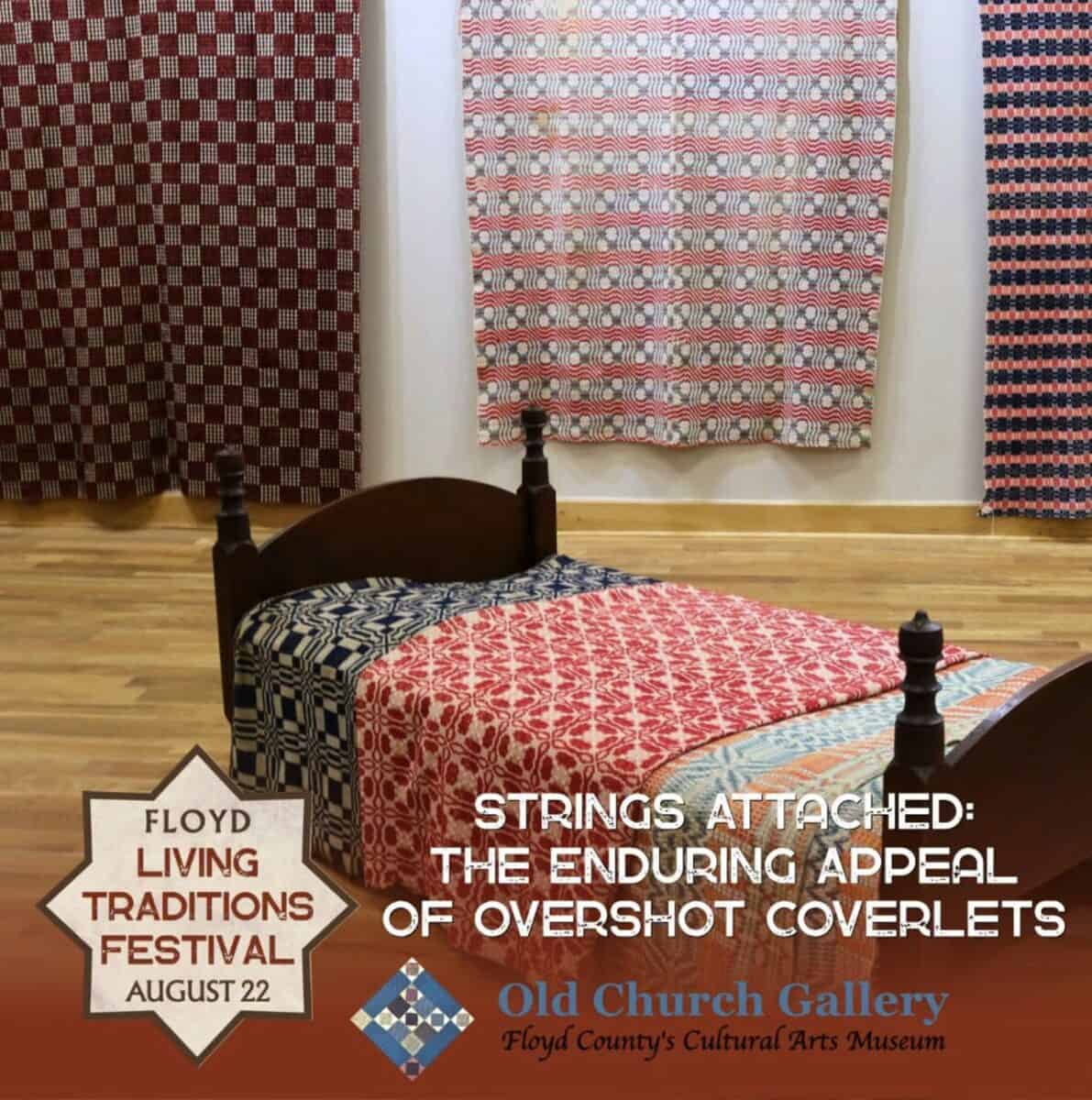
Please join us for a Hayloft Gallery Talk: Wed., Sept. 2nd, 5:30 pm.


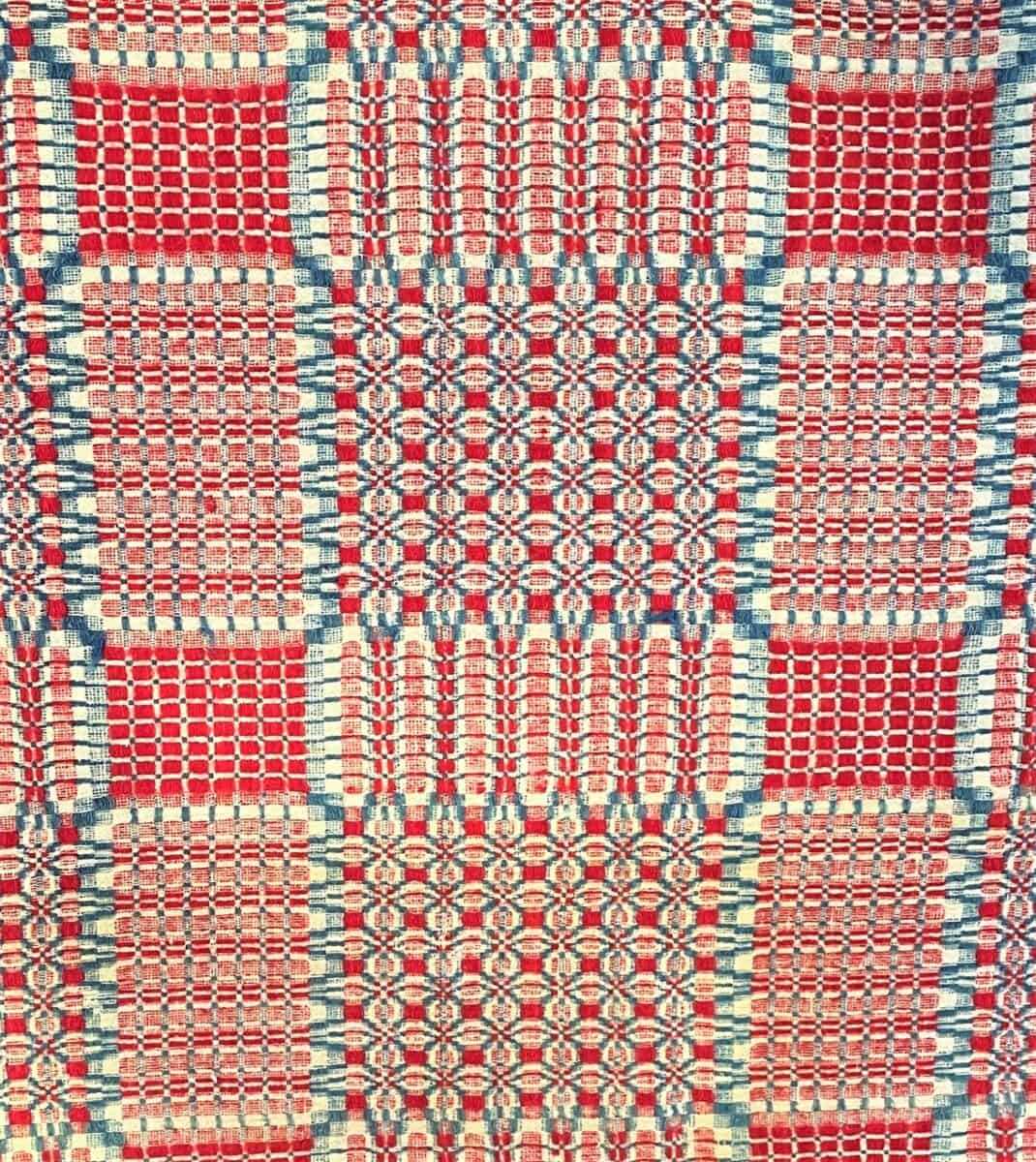
Overshot coverlets were handwoven for bed coverings. “Overshot” refers to the dyed wool weft thread floating over and under plain weave linen or cotton warp thread to form patterns. Skilled weavers, often women, shared drafts of designs (patterns written in binary code); they also worked out their own variations and color combinations to showcase their creativity.
Early settlers built four heddle looms, which required users to weave double or triple lengths of cloth, then sew the panels together in order to create bed-sized covers.
The Old Church Gallery coverlet collection includes forty coverlets woven in Floyd County with thread spun from the wool of sheep tended on county farms. Many coverlets used purchased cotton thread, though flax was grown here, and some families processed their own linen thread for weaving.
Shortly after the Civil War, Wilson T. Vaughn (1810-1883) began a commercial wool-carding operation near Buffalo Mountain. His sons soon expanded the operation, adding looms and equipment to clean wool for hand spinning, a boon for home weavers making coverlets. After J.T. Dunn joined the company around 1901, the Vaughn-Dunn Woolen Mill added larger looms and hired weavers to make coverlets in a factory setting. A water-powered turbine drove the carding machines, yarn spinners, and looms which produced coverlets, woolen blankets, and shirt flannel. Some of our coverlets and blankets were produced at the Woolen Mill.