

View Collections | Browse Cultural Objects | Browse Oral History
Images (click to enlarge)
-
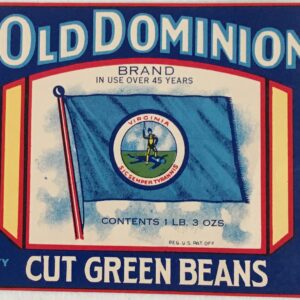
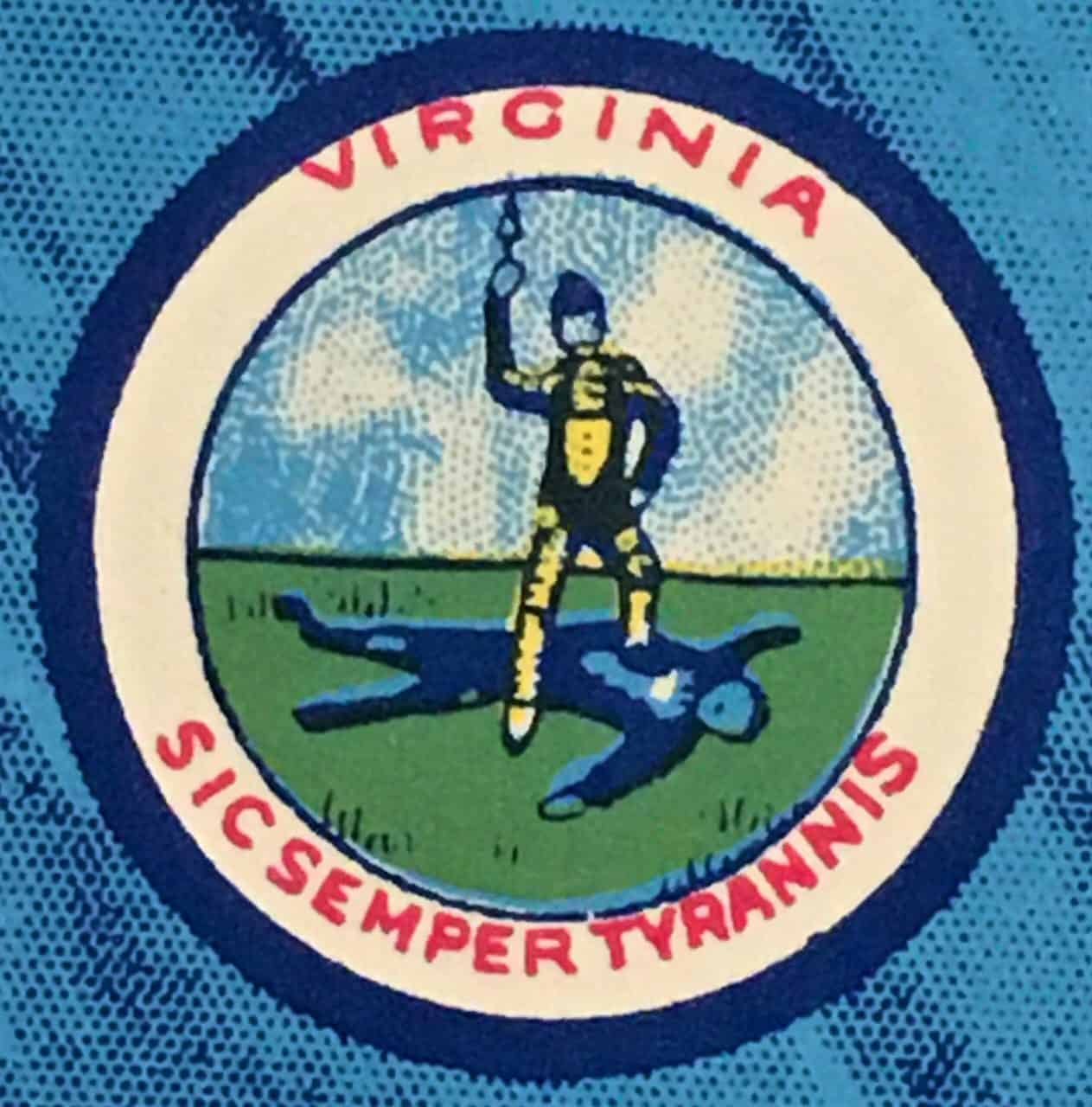
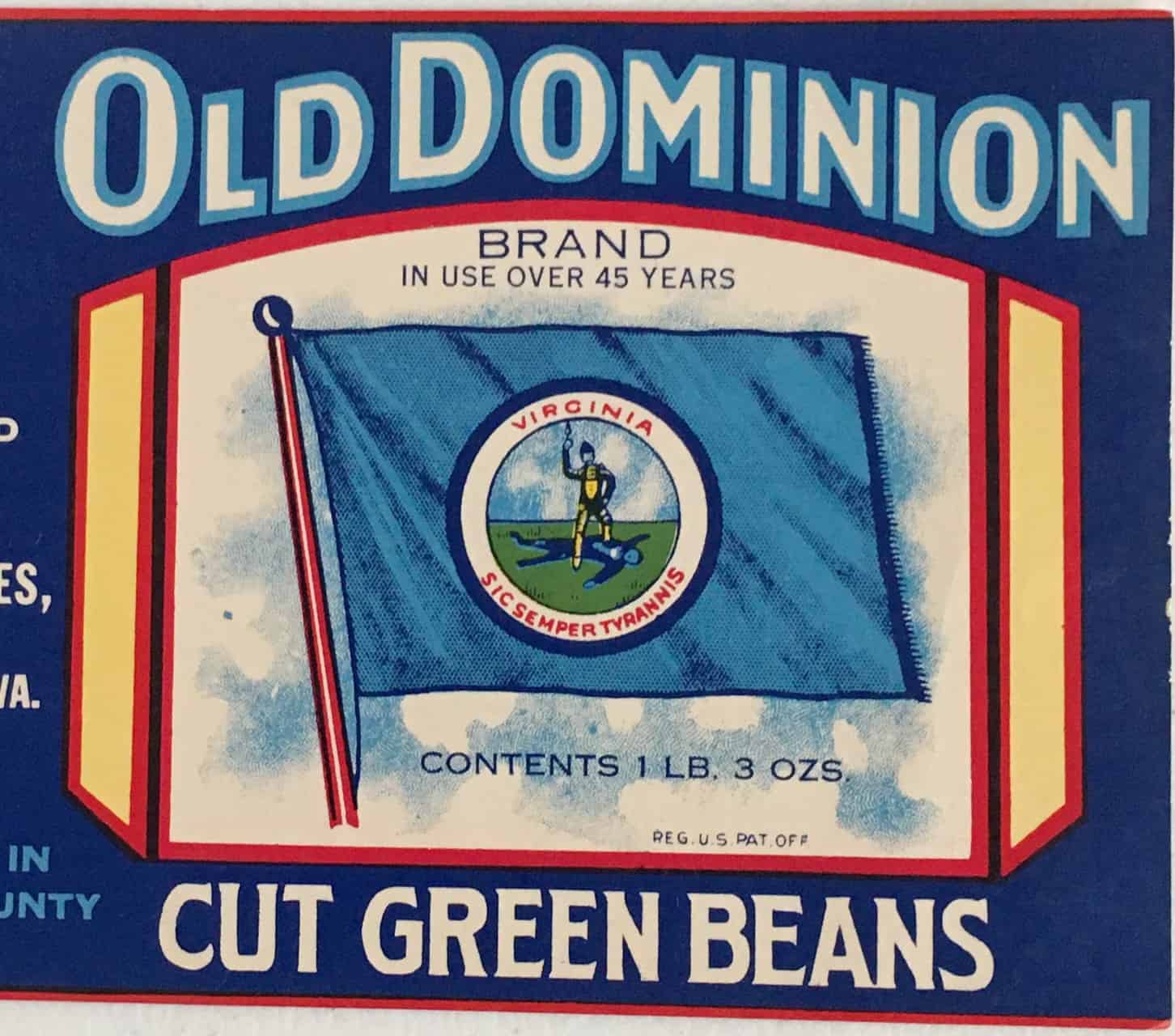
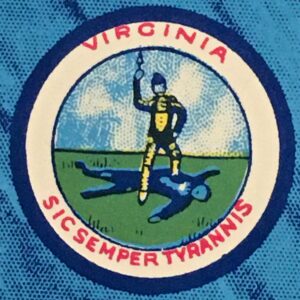 The Old Dominion Brand artist chose not to depict "Virtus," the Roman goddess of virtue, whose image was used by George Wythe in designing the official seal and flag of Virginia.
-
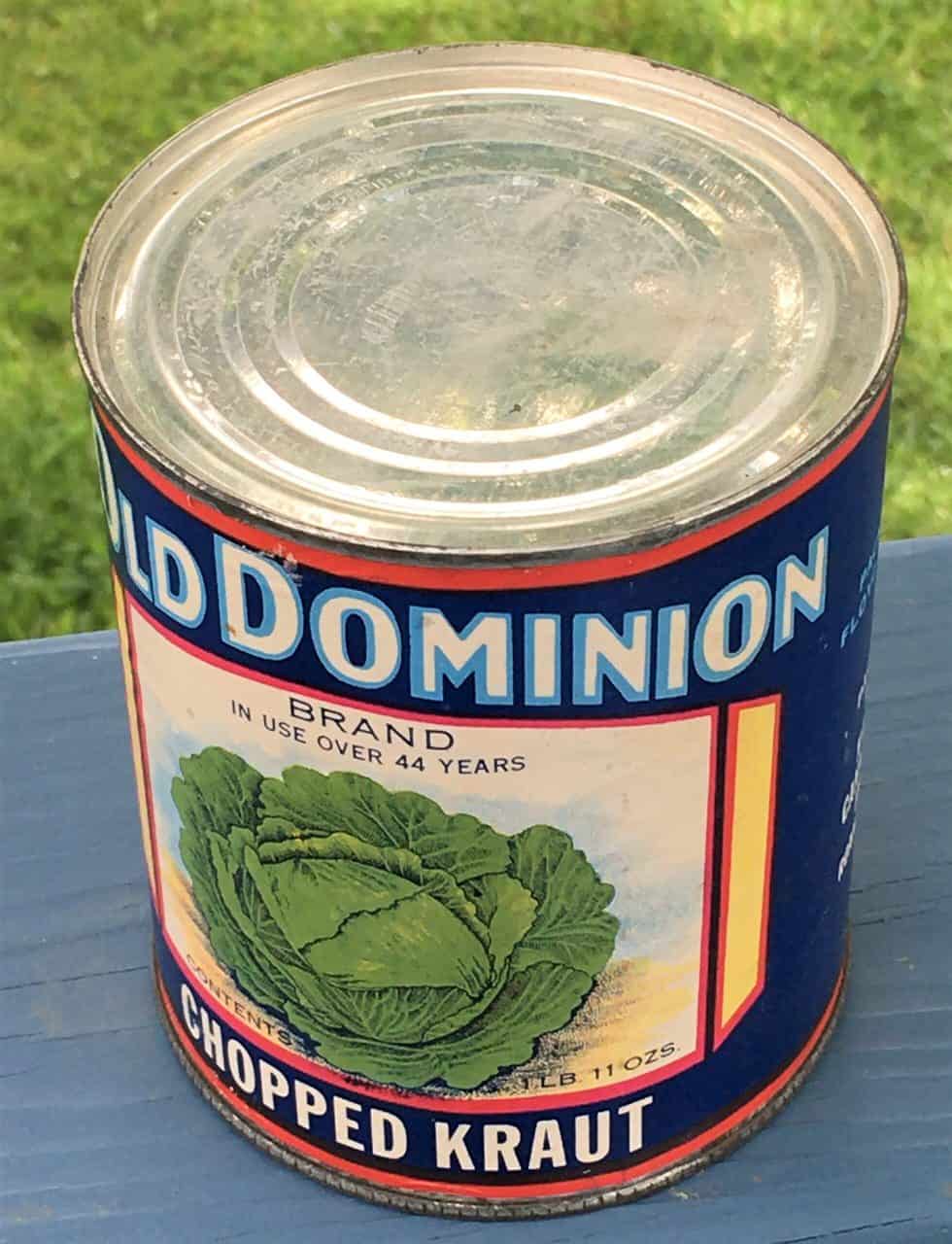
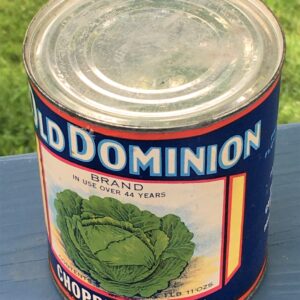 Consumers rated kraut made at this cannery as very close to homemade in quality. Romney Slusher and Ran Belcher were issued gum boots by the company and "bruised" the shredded cabbage while stomping around in a huge vat.
-
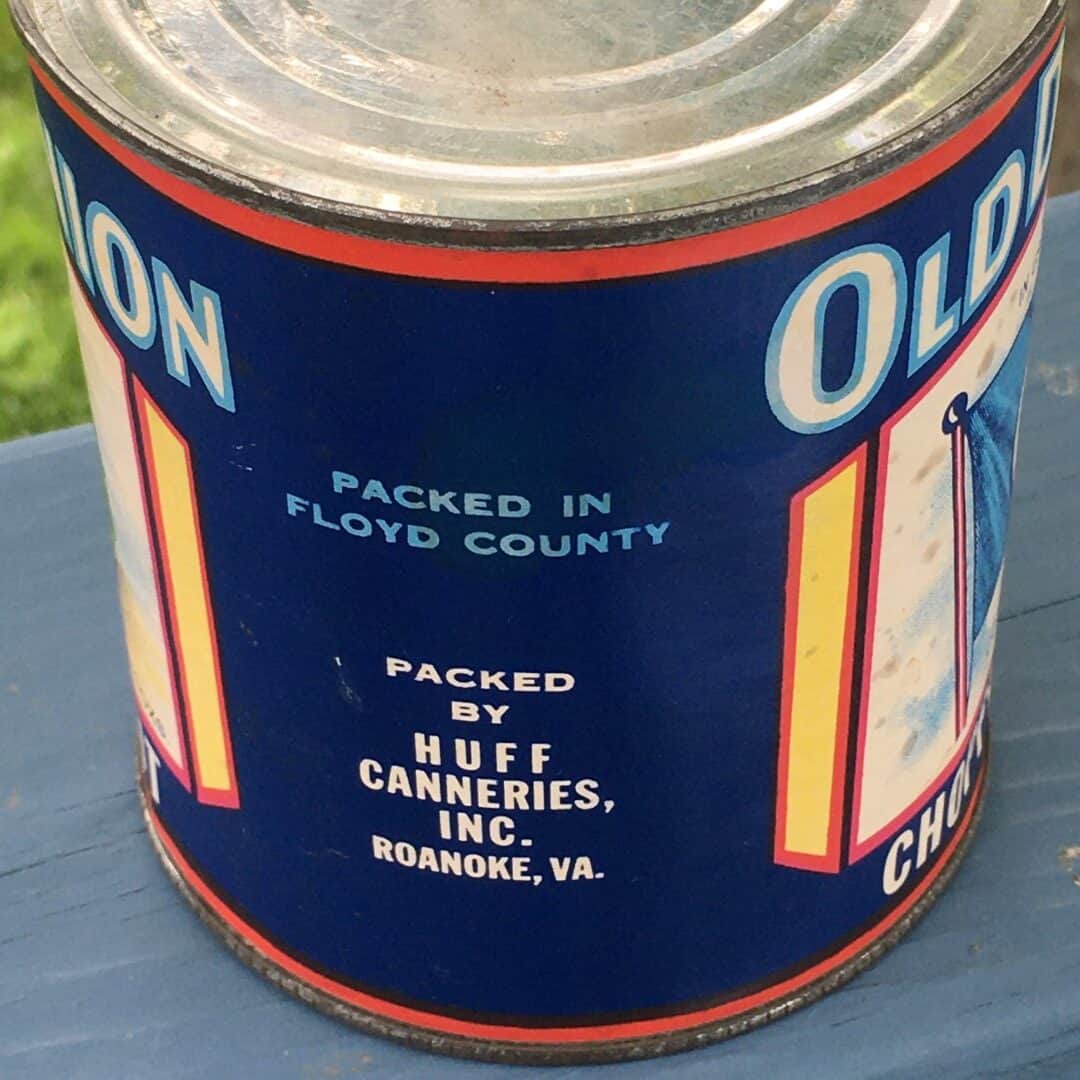
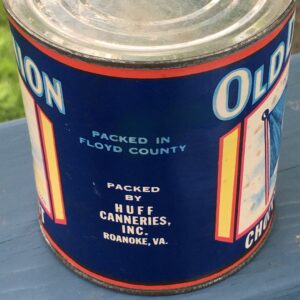 Huff's Cannery was one of several commercial canning operations in Floyd County in the first half of the Twentieth Century.
-
 S.B. Huff rented a Roanoke brewery in 1954 and briefly attempted canning "Olde Virginia Special" and "Virginia's Famous" beers. Though inexpensive, their taste never caught on with drinkers.
Cultural Objects, Photos and Documents
Old Dominion Canned Vegetable Labels
People
Associated Person: S. B. HuffDate
1950sPlaces
Amos/Shelor's Mill (Courthouse District)Material/Medium
Paper
Specifications
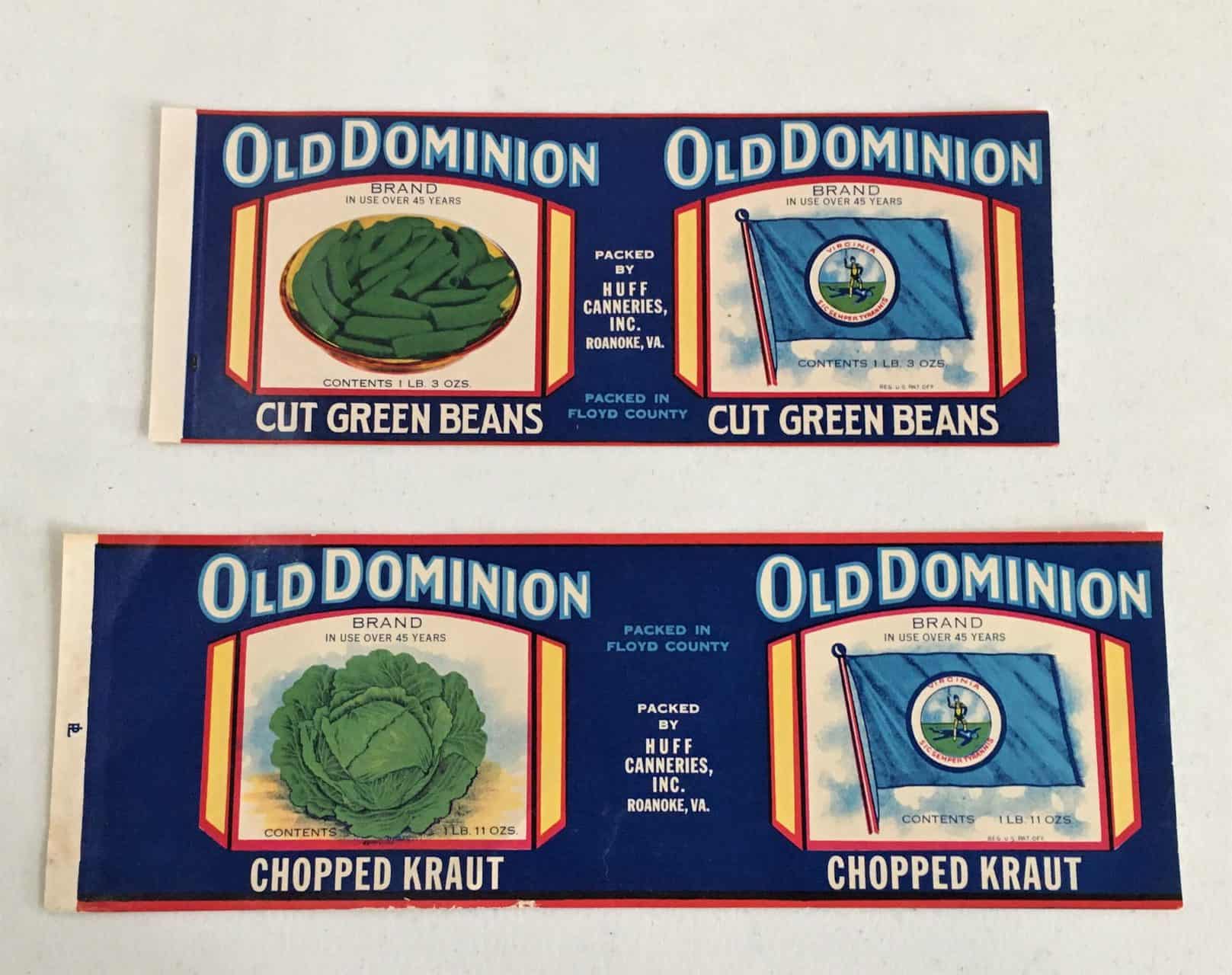
- Length (bean label): 11 inches
- Width (bean label): 4 1/4 inches
- Length (kraut label): 13 inches
- Width (kraut label): 4 3/8 inches
Description
The Old Dominion branding includes their version of the Virginia flag on one side of the label and an artist’s rendition of the specific food on the reverse side. The flag and product images are framed in red and yellow and stand out against a dark blue background.
Keywords
Old Dominion Company, cannery, truck crops, kraut, sauerkraut, World War IINotes
This cannery was first operated by Bill Cherry but had ceased operation. Wartime demand in the early 1940s made it lucrative for S.D. Huff of Roanoke to reopen it. Local families paid a $1.00 per pound for seed and signed contracts to grow so many acres of beans, cabbage, or tomatoes. Locally grown apples and peaches were also canned here. As George Shelor pointed out in a 1985 interview published in The Mountain Laurel newspaper, “There was a right smart income to people in this area. It was a right good, little industry, right profitable. A lot of housewives would come down and work. I know some today that wouldn’t be drawing Social Security if it hadn’t been for that cannery.”
Late blight hit tomato crops during the war years after which this factory processed only green beans and kraut. With the end of the war, regulation increased, and called-for upgrades to the facilities led to its closing in the early 1950s.